
Wells County Multi-Day Arrest Reports
The sheriff publishes no 72-hour, weekly, or multi-day arrest blotter. Wells County's official sheriff pages cover the office, the jail, public information, SAVIN, and warrants. There is no browsable arrest archive among them. Bluffton, Ossian, and Markle police pages offer no daily or weekly booking list either. So the local paper fills the gap. The Bluffton News-Banner runs a recurring Police Notebook. It covers incidents, accidents, fires, and selected arrests from Bluffton, Ossian, and Markle. Treat it as journalism, not a jail ledger. The notebook can skip events or summarize agency material. It may run after release, or sit behind a membership wall. And a publication date tells you nothing about the actual booking time.
Read the Wells County Blotter
Work backward by date. Keep the source type in mind too. A recurring notebook shows selected activity across several days, while a court docket speaks to a later stage, and neither one proves who is in custody right now. For the newest jail receipts, Arrests Last 24 Hours lays out the official confirmation path.
- Open the local-news index. Identify a dated Police Notebook rather than assuming every local story is part of the blotter.
- Compare event and publication dates. A post may compile items from prior days, especially around a weekend or holiday.
- Note the named agency. The arresting agency is the proper first contact for an arrest report.
- Separate arrest from custody. Contact Wells County Jail or use Indiana SAVIN to determine whether the person remains held.
- Check the disposition. Search MyCase or ask the Wells County clerk for the filed case and later result.
- Request missing or older material. Send a focused APRA request to the sheriff, police department, or court custodian that holds it.
One arrest can spawn several records. The police report covers the arrest and investigation itself. A jail log notes receipt, holding authority, bond, release, or transfer, while the court docket lists the charges filed and each ruling. To match them up, bring a name, a date, the agency, and the court cause number when you have it.
News-Banner Police Notebook Pattern
The clearest recurring coverage path: the News-Banner local-news index.
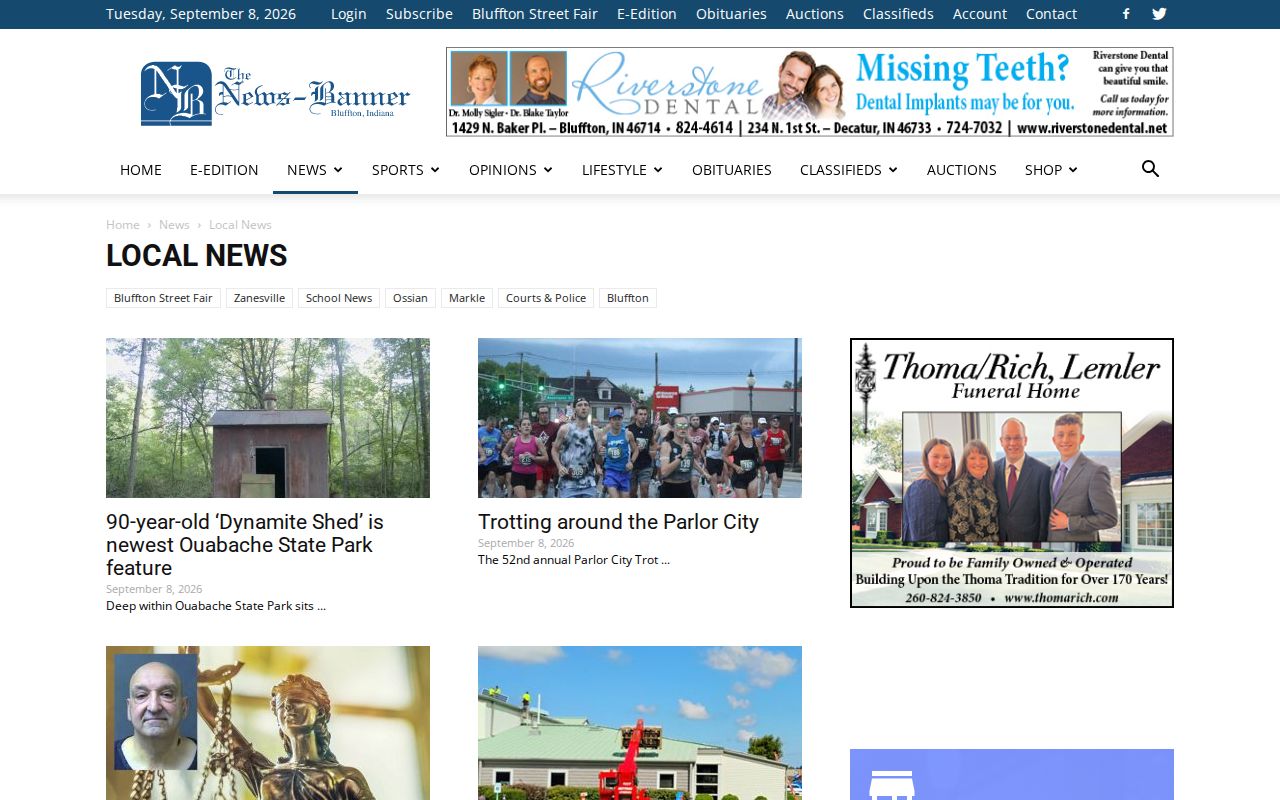
Think local reporting, not a full arrest database. Dated posts often run several times a week. No daily cadence is guaranteed, and archive depth varies. City filters can help narrow the coverage, but they do not define who holds a person in custody. A dated Police Notebook example shows the format in action.
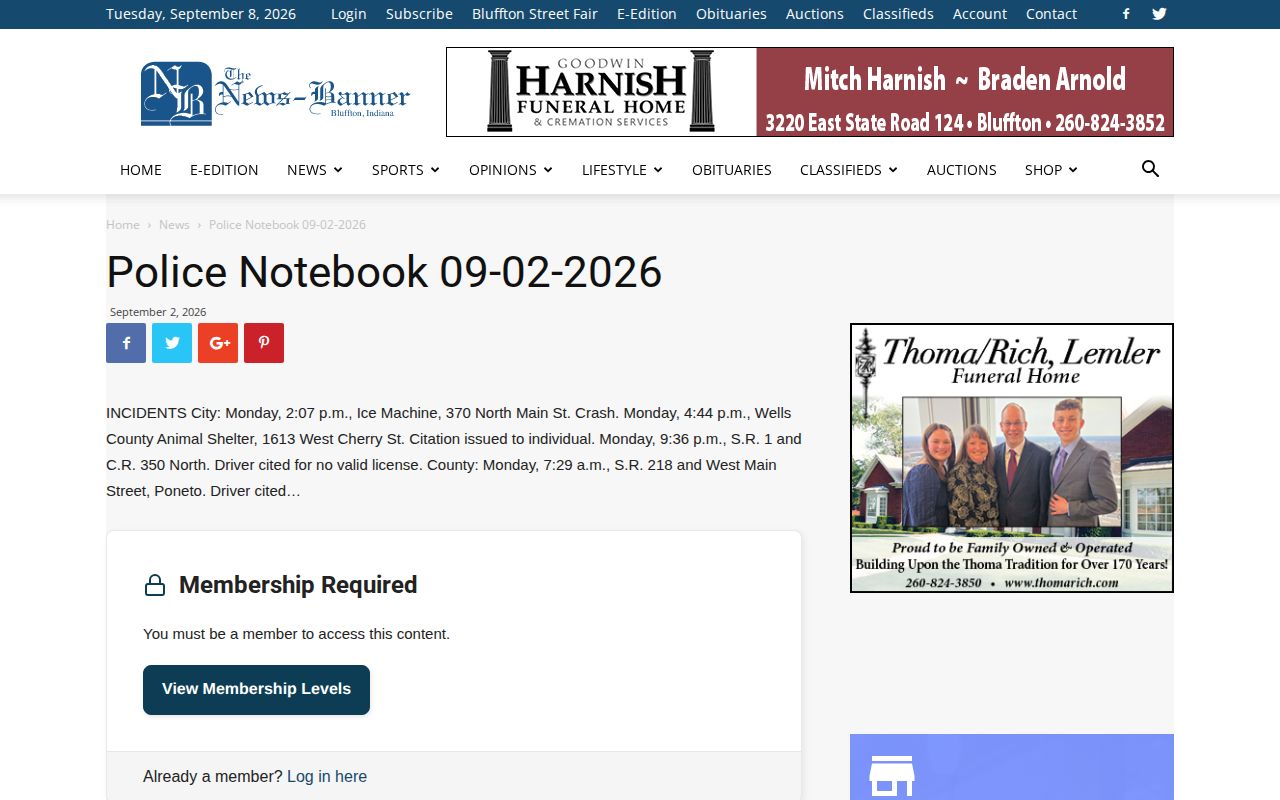
A dated notebook page is selected newspaper coverage, not a sheriff log or complete booking list. It is not a custody statement. Named people may already be out of jail. The notebook leans toward text, and no standing booking-photo gallery runs alongside it.
What Wells Arrest Entries May Show
No county-published screen exists to promise specific fields. A notebook may just summarize in prose. Indiana law, though, spells out the fields for daily arrest logs, and jail or lockup logs carry a related set. The table separates those official record categories from what local news chooses to print.
| Information | Likely source and limit |
|---|---|
| Name and age | May appear in an arrest log or report; verify similar names with more than one field. |
| Arrest time and location | Daily arrest-log category; it is not the jail receipt or news publication time. |
| Officer and agency | Shows which law-enforcement custodian may hold the full report. |
| Alleged charge | An intake or arrest-stage charge that may differ from the charge filed in court. |
| Reason for detention | Jail-log category, such as a warrant, court order, hold, or other stated authority. |
| Receipt and discharge | Jail events; a newspaper item may not include either one. |
| Bond amount | May change by court order and does not establish guilt or present custody. |
| Photograph | No Wells official online-photo rule was found; a publisher image is not proof of current status. |
When exact wording matters, ask for the original government record. Agencies can apply lawful disclosure exceptions. Nor must they create a new record for you. A booking photograph, if one is maintained, should be requested from its custodian, since Wells County posts no such image online.
From Wells Arrest to Court Outcome
A Wells court docket example from the News-Banner shows the post-booking stage.
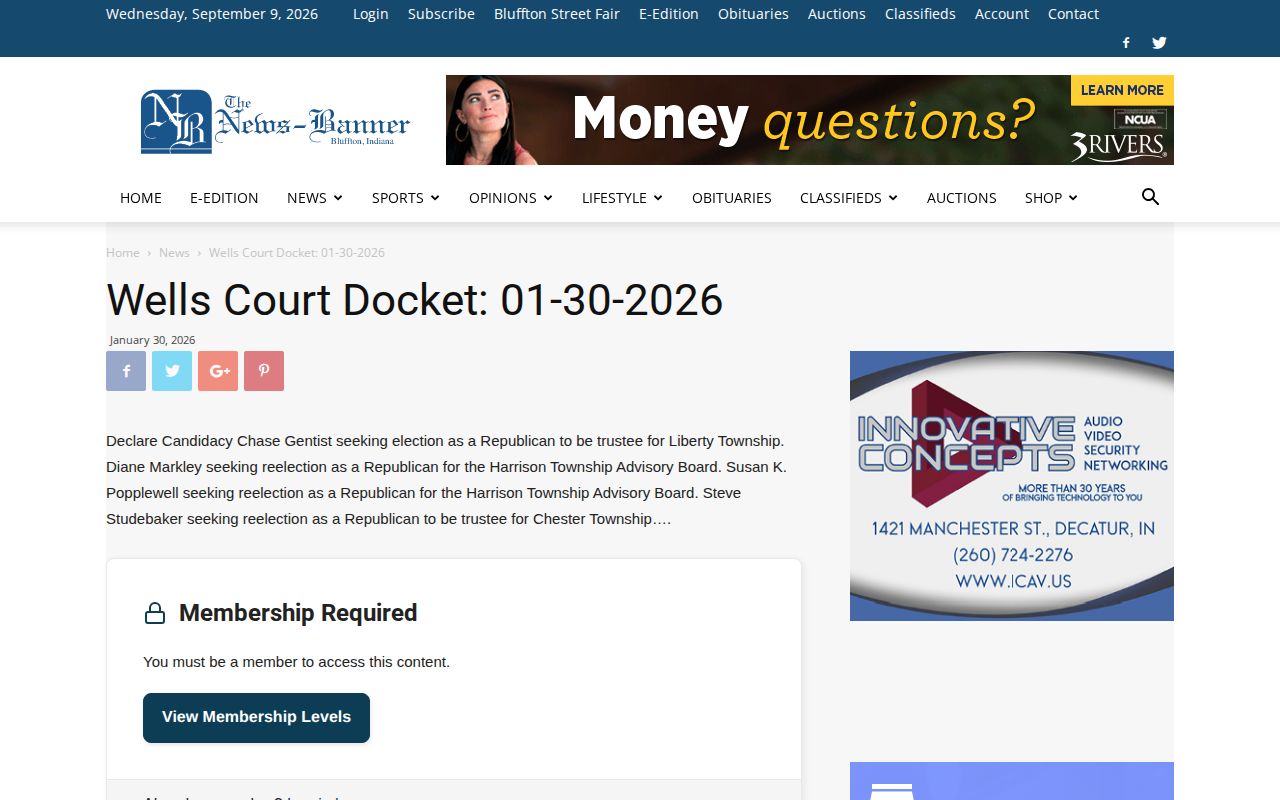
A docket story can flag later proceedings. A news summary is still secondhand, though. For the official public court record, use Indiana MyCase and the county clerk. MyCase is not a full criminal-history source, and it hides confidential or restricted material along with some documents.
- Booking
- Jail intake after a person is received.
- Charge
- An charge that may change after a prosecutor reviews the case.
- Disposition
- The court’s resolution, such as dismissal, plea, trial result, or another final action.
- Transfer
- Movement from one custodial authority or facility to another.
Protected details deserve care. Juvenile, sealed, expunged, victim-identifying, and medical information should never be pieced back together from a stale copy or a search snippet. If a record is closed, leave it closed.
Unofficial Wells Booking Archives
Start with official sources. After the sheriff, SAVIN, APRA, and court routes, two countywide third-party pages can serve as leads. They cannot confirm custody or promise completeness. Their images are not shown here. Their counts are not county totals. RecentlyBooked's Wells County section offers an unofficial recent, roughly 30-day-style window. That refresh schedule is the publisher's, not the county's. Detail pages may carry names, dates, booking numbers, physical descriptions, charges, and photographs. Check claims with the agency and court. Busted Newspaper's Wells section displays timestamped booking cards and cites government sources. It stays unofficial, with no guaranteed completeness, custody status, or fixed refresh interval. Mugshots.com keeps a smaller and likely older Wells archive, making it weaker for a multi-day view.
Note: Third-party persistence after release does not prove that the sheriff still displays or retains the same image online.
Wells Arrest Archives and Retention
Web pages and government files live on different clocks. A Wells County booking photo can vanish from a site. The official arrest record stays put. It sits untouched in a custodian's drawer. A newspaper story about an arrest may outlast the police paperwork it described. The county posts no schedule for jail logs or photographs online. Nothing promises how long they stay up. What you see today may not be there next month.
Retention rules do exist, though. The Indiana Archives and Records Administration sets schedules for county and local records. Its Public Safety Agencies schedule covers felony case files. Murder and Level 1 through 5 cases are kept permanently. Level 6 felony files are held seven years past the arrest year. Certain report series last ten years, and radio logs just 90 days. None of that fixes a clear period for booking photos, since classification drives every decision.
For an older Wells County arrest, contact the sheriff or the arresting agency. Ask which series covers it. Records tied to a request, lawsuit, or audit cannot be destroyed until that matter closes. Suppose no local series seems to fit. IARA offers county help at cty@iara.in.gov and (317) 232-3380.
Older court outcomes may sit with the Wells County clerk. MyCase does not expose every aged document. Newspaper archives and library holdings can point you toward dated leads. Still, they are no stand-in for the official court or sheriff record. A focused APRA request is the best starting move. Name the person, date, agency, and exact record sought.
Search Public Records
Sponsored Results